
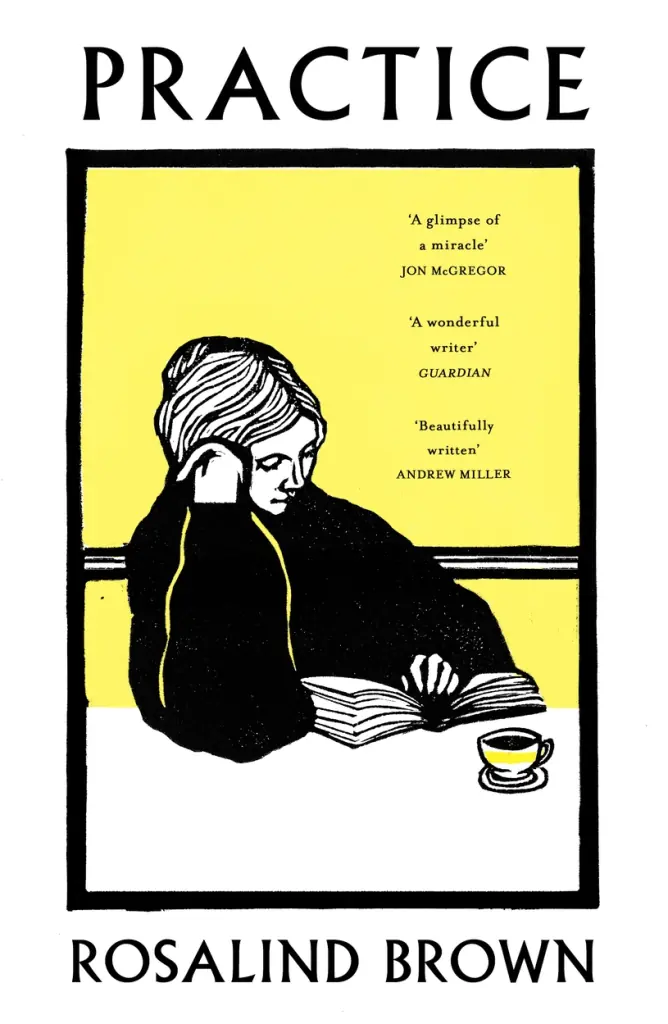
I have a simple rule - if I meet someone at a party and they say they've written a book, then I will immediately buy that book. It's a strategy which has worked out well; leading me to some truly interesting and delightful prose.
Rosalind Brown (a fellow UEA graduate) has written a stunning little book. Practice is an almost Proustian meander through a day-in-the-life of a young woman going through an essay crisis. Much like R. F. Kuang's "Katabasis", I'm rather glad the author found university to be a bewildering and, at times, upsetting experience as it provides rich fodder for this tale.
There is an inherent tragedy in studying English literature. The more you read, the more futile it becomes. Just like repeatedly saying a word aloud creates semantic satiation, so to does the repeated reading of sonnets drive away all their meaning. The closer you study a poem the further it slips from your grasp. The more introspective you become, the more you lose sight of what you really want out of life.
As Proverbs 26:11 suggests, some students are like a snake which is compelled to eat its own tail. The protagonist, Annabel, isn't a caricature but she sure is a trope that you've met in halls. She's a woe-is-me wretch who'd rather cultivate a "Heated Rivalry" style interior monologue rather than engage with those around her. So self-absorbed to that she doesn't realise that, not only do other people have feelings, other people are carrying the same burden she does. I suspect her essay research really should have widened to include the seminal "Male gays in the female gaze"!
It's a short novel, but pleasingly thorough. Although there aren't any major twists, I can't say I predicted how the story would evolve and conclude. The punctuation and sentence structure is charmingly idiosyncratic and, I think, perfectly fits the story.
A note on formatting. The ePub has hard page breaks. That means some "pages" contain little more than a paragraph. I suspect that's intentional as it gives a wonderfully staccato pace to the text. Our day is broken up into little moments which don't quite fit the strictures of a chapter, yet we experience the day as a cohesive whole.
An excellent book - but one to read after you've finished your homework.


