
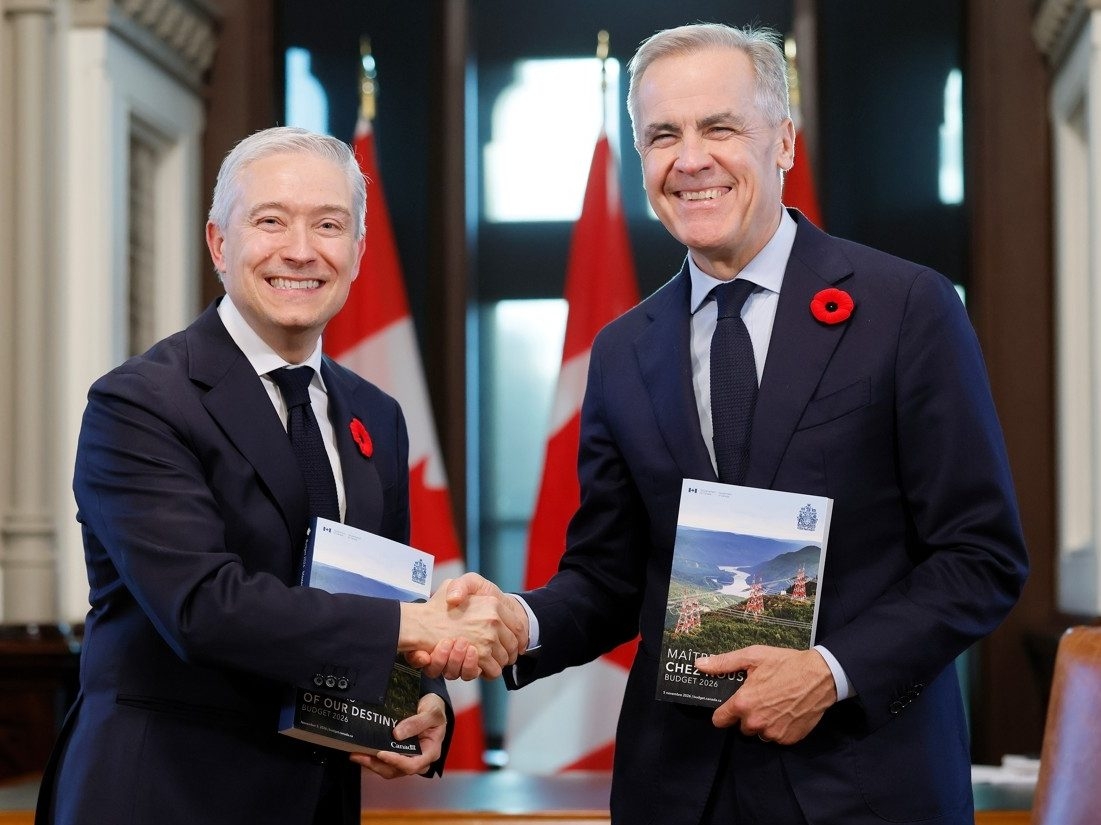
Because of the way Prime Minister Mark Carney is spending our money, taxpayers have a lot more to worry about than the size of the federal deficit.
The even bigger concern is the rate of federal borrowing.
In its latest budget, the Liberals are pouring hundreds of billions of borrowed taxpayer dollars into crown corporations and other so-called arm’s length agencies to finance government programs.
These costs don’t appear in the federal books as part of the deficit.
Under what’s known as accrual accounting, this spending is classified as investments, rather than liabilities, even though it’s all being financed by government debt.
Adds to debt
Unless these investments return profits above the cost of financing them, they add to the debt, which taxpayers are responsible for paying.
Parliamentary budget officer Annette Ryan warned that federal borrowing of this type is growing at more than double the rate of federal deficits over the next five years – $732.9 billion compared to $333.3 billion.
“This obscures the realities of cash debt and raises questions about whether the current fiscal framework provides a complete and transparent picture of Canada’s fiscal sustainability,” Ryan wrote.
“Cash outlays drive borrowing, which … increase market debt and public debt charges, independent of how they are recorded.”
RECOMMENDED VIDEO
Borrowed money must be paid back with interest
There is no free lunch. Money the government borrows eventually has to be paid back, with interest, no matter how the government classifies it.
A previous PBO report warned that the feds misclassified $94 billion of operating expenses as capital investments, rendering meaningless the PM’s boast that he will balance the operating budget next year.
In fact, Ryan wrote: “A balanced operating budget should not be interpreted as a balanced fiscal position. By design, it includes debt-financed capital spending, meaning borrowing and debt can continue to grow while the target is being achieved.”
Kevin Lynch, a former federal deputy finance minister, warned in a Globe and Mail column that the Carney government has already spent its entire revenue windfall from high oil prices and inflation on new government programs rather than reducing deficits.
It’s also gambling that there will be no major global economic shocks over the next five years.
“Canadians had better hope the budget’s two big bets pay off,” Lynch concludes, because taxpayers will be on the hook whatever happens.


