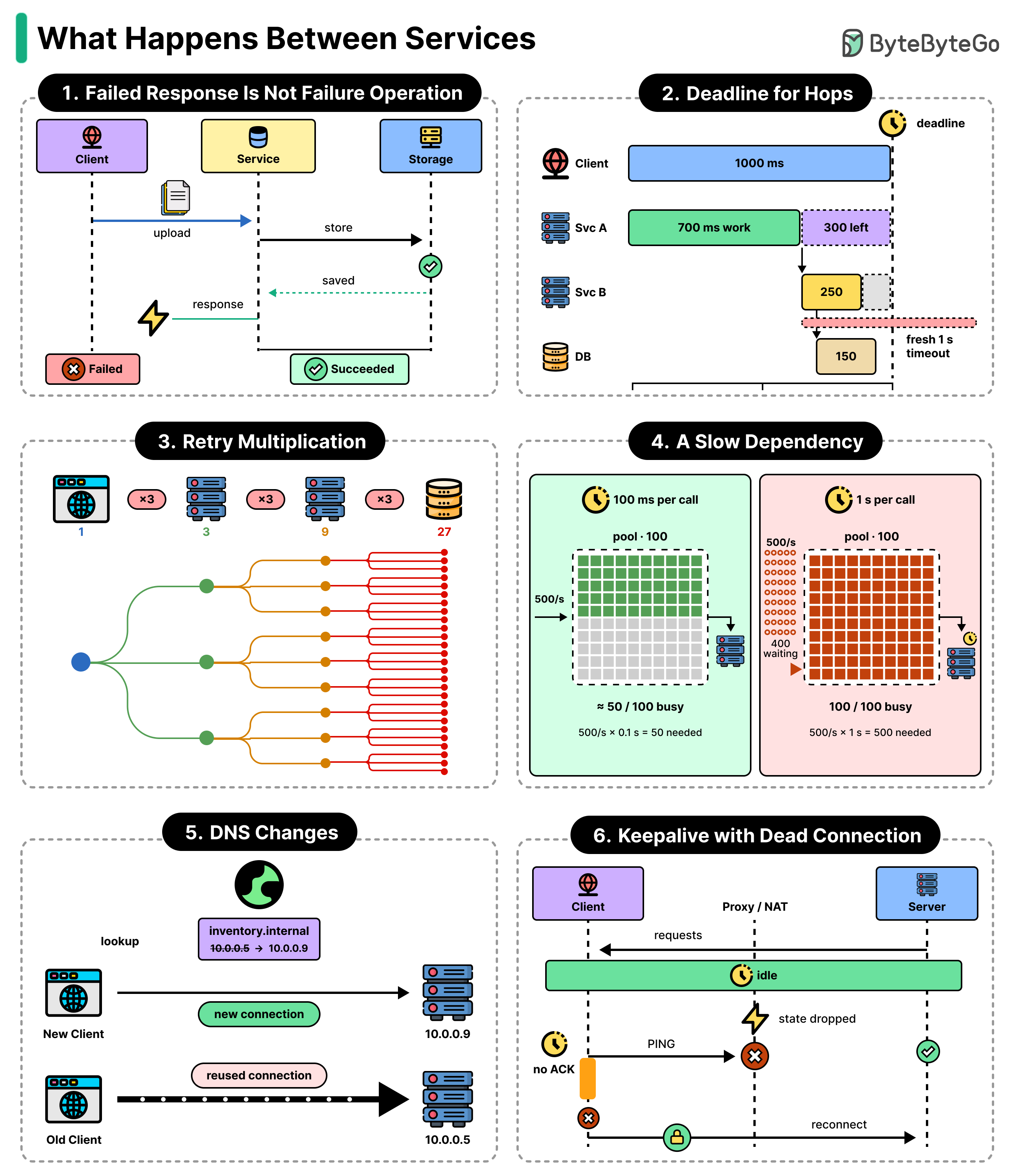
When you draw a system architecture diagram, services are often shown as boxes, and arrows between them show the communication pathways. Most of the time, we pay the greatest attention to the boxes that contain the code, databases, CPU usage, and deployments. But every arrow also hides critical work, resources, and a bunch of assumptions.
You can have a failing request even when both services are running correctly. One service might be waiting for a connection. Or it might go to an outdated address. Or the request might reach the service after the calling service has already given up. All of this is part of the invisible system, and this is what we’re going to explore in this article.
Here’s what we’ll cover:
The nature of a service call
Why moving data is costly
Why healthy services can have problems
How downstream calls spend time
How retries can cause issues
How slow dependencies impact the requests
How DNS changes impact requests